
By Ashrafuddin Pirzada
PESHAWAR: Business leaders from Pakistan and Afghanistan have called for keeping bilateral trade and transit arrangements separate from political disputes and security issues, while urging both countries to establish a verifiable security mechanism with clearly defined responsibilities.
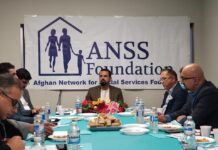
In a joint press statement issued here on Saturday, Senior Vice President of the Pak-Afghan Joint Chamber of Commerce and Industry (PAJCCI), Zia-ul-Haq Sarhadi (Sitara-e-Imtiaz), and PAJCCI Board of Directors Afghan chapter, Ahmad Shah Yarzada, said an objective assessment of the prolonged border closure was needed.
They said trade and transit should be separated from political and security disputes, alongside a security mechanism involving clear responsibilities, monitoring and consequences for violations.
The businessmen said the objective should not simply be to close borders, but to develop a system that strengthens security, addresses terrorism, allows legitimate trade to continue, protects businesses and maintains Pakistan’s position as an efficient gateway between Afghanistan, international markets and central Asia.
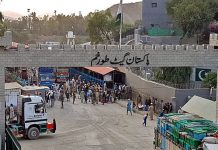
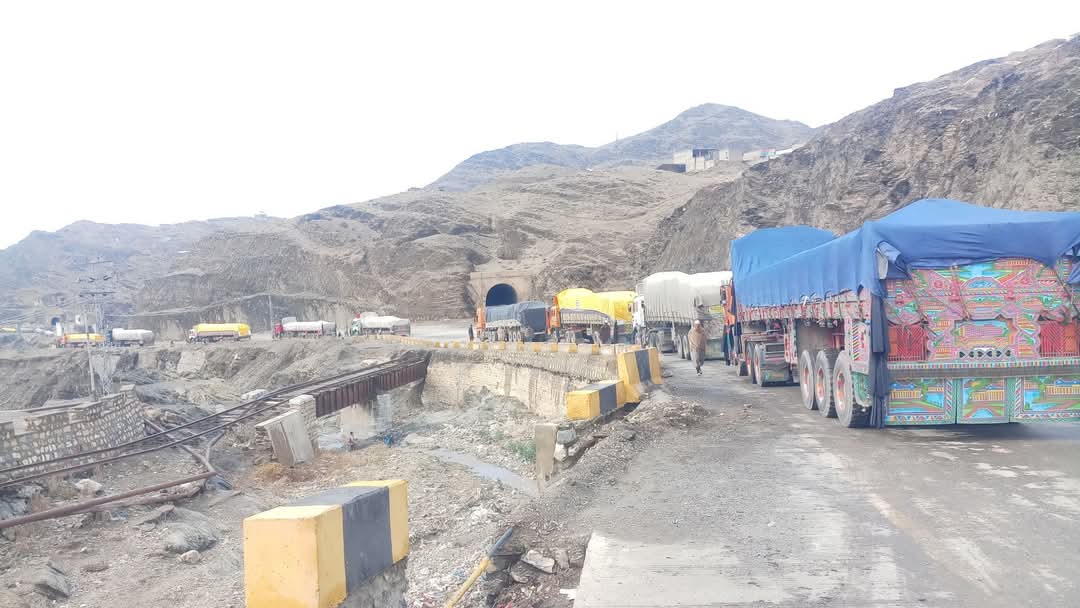
They also called for an objective assessment of the more than 10-month-long border closure to determine whether the unilateral suspension of trade, transit and border crossings had actually improved regional security or contributed meaningfully to reducing terrorism.
The businessmen said relying heavily on trade and transit closures appeared to have been a serious miscalculation of the economic and strategic consequences.
“Instead of producing a decisive solution to the security problem, it has caused enormous and in many cases, irreparable economic losses to traders, exporters, importers, transporters, industrialists, customs agents, labourers and thousands of families whose livelihoods depend upon cross-border commerce,” they said.
They noted that the impact had not been limited to Afghanistan, as Pakistan had also suffered significant losses, including reduced exports, transit revenues and its position as a natural trade corridor to Afghanistan and Central Asia.
They said bilateral trade had fallen sharply while Afghan transit trade through Pakistan had reached a historic low.
The businessmen acknowledged Pakistan’s legitimate security concerns, particularly militant attacks linked to the Afghanistan-Pakistan border, but said closing trade routes was not equivalent to addressing the underlying security problems.
They warned that Afghanistan was gradually redirecting its trade through Iran and Central Asia, meaning prolonged border closures could eventually weaken Pakistan’s economic and strategic leverage rather than permanently isolating Afghanistan.
They said that the businesses in Pakistan had collapsed, investment confidence had deteriorated, supply chains had been disrupted and employment opportunities had been lost, causing hardship for thousands of people on both sides of the border.
“If a policy causes billions of dollars in economic losses, damages businesses and livelihoods, pushes Afghanistan toward alternative trade corridors, weakens Pakistan’s position as a regional transit hub and still does not provide a clear and sustainable reduction in terrorism, then should that policy continue indefinitely?” the businessmen asked.
They stressed that security must remain a priority, but trade, transit and economic relations should not be treated as substitutes for an effective counterterrorism strategy.
The Pak-Afghan businessmen community further said bilateral and transit trade should be kept separate from political disputes because it supports millions of poor families across the region.
“The ground reality is that hundreds of millions of people in the region live below the poverty line and closure of bilateral and transit trade has only added fuel to the fire by deepening their hardships,” the statement said.