
By Ashrafuddin Pirzada
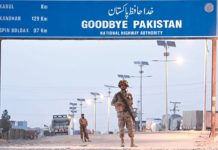
LANDIKOTAL: Khyber Chamber of Commerce and Industries president Muhammad Yousuf Afridi on Thursday said that the prolonged closure of the Torkham border with Afghanistan has entered its 327th day, severely affecting millions of people in Khyber Pakhtunkhwa and forcing thousands of workers associated with small industries to face financial hardship.
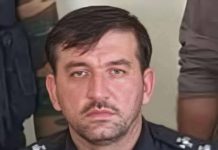
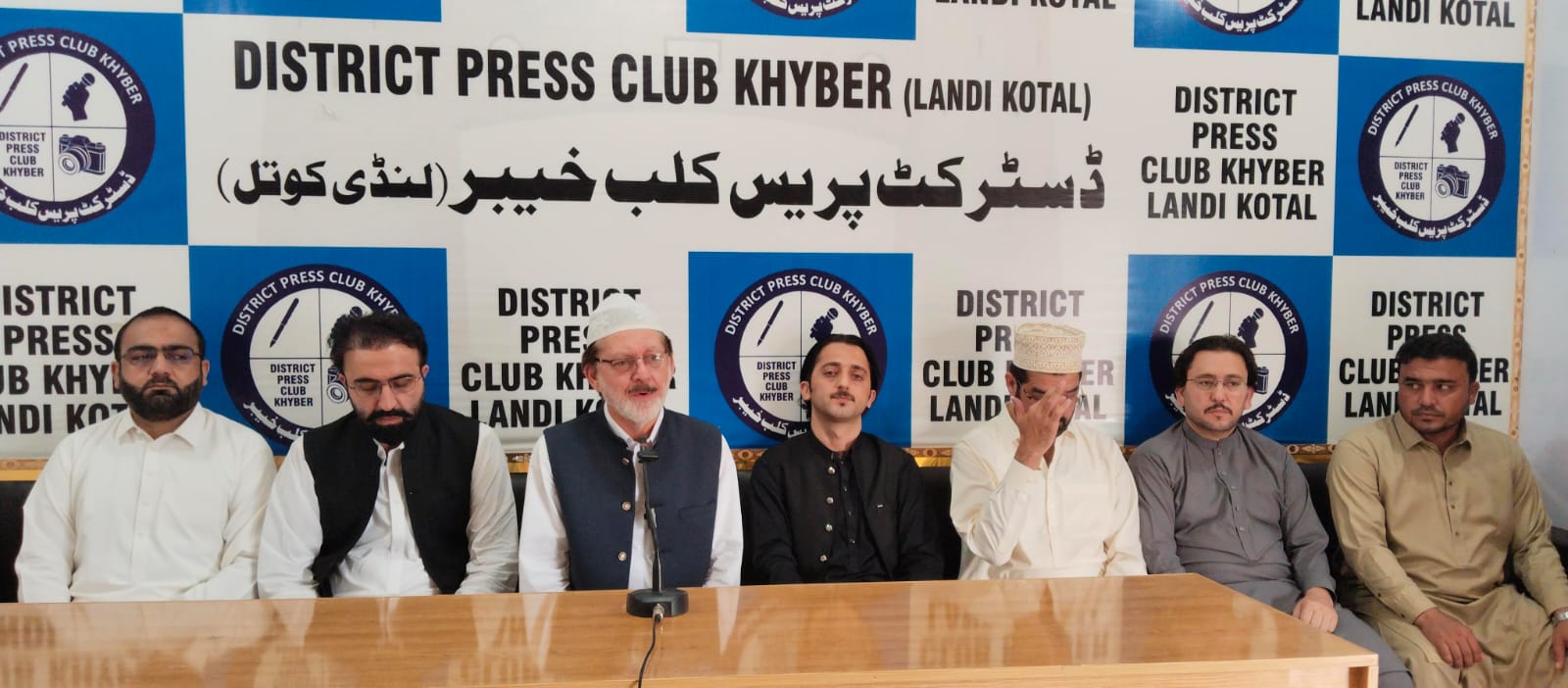
Speaking at a press conference here at District Press Club Landikotal, Khyber Chamber of Commerce President Haji Yousaf Afridi, Vice President Wajid Ali Shinwari, Hazrat Ali Bahlol, Haji Abid and others said the business community had repeatedly raised its voice against the border closure at every available forum, but no practical action had been taken so far.
They called for keeping politics separate from trade, stressing that the border issue should not be politicized and commercial activities should be allowed to continue.
The traders said a meeting had previously been held in Islamabad with the interior minister, attended by office-bearers of the Balochistan Chamber of Commerce and the Sarhad Chamber of Commerce. The minister had assured them that a detailed meeting would be held in Khyber Pakhtunkhwa to discuss the issue, but the promised meeting had yet to take place.
According to the traders, the closure of all border crossings with Afghanistan has so far caused an estimated $2.5 billion in losses, including $1.644 billion in exports and $817 million in imports.
They said thousands of transport businesses, hotels and markets, both small and large marketplaces, had been forced to close, affecting the livelihoods of thousands of people.
The business community further claimed that Khyber Pakhtunkhwa had suffered Rs7.27 billion in losses in the form of cess tax due to the border closure. They criticized the provincial government for remaining silent on the issue, adding that transit trade had also suffered significant losses.
Khyber Chamber President Haji Yousaf Afridi demanded an audit of the Khyber Chamber of Commerce and Industry for the past five years. He also called for making the chamber’s central office functional in Khyber and ending what he described as alleged interference by certain non-local individuals.