
By Ashrafuddin Pirzada
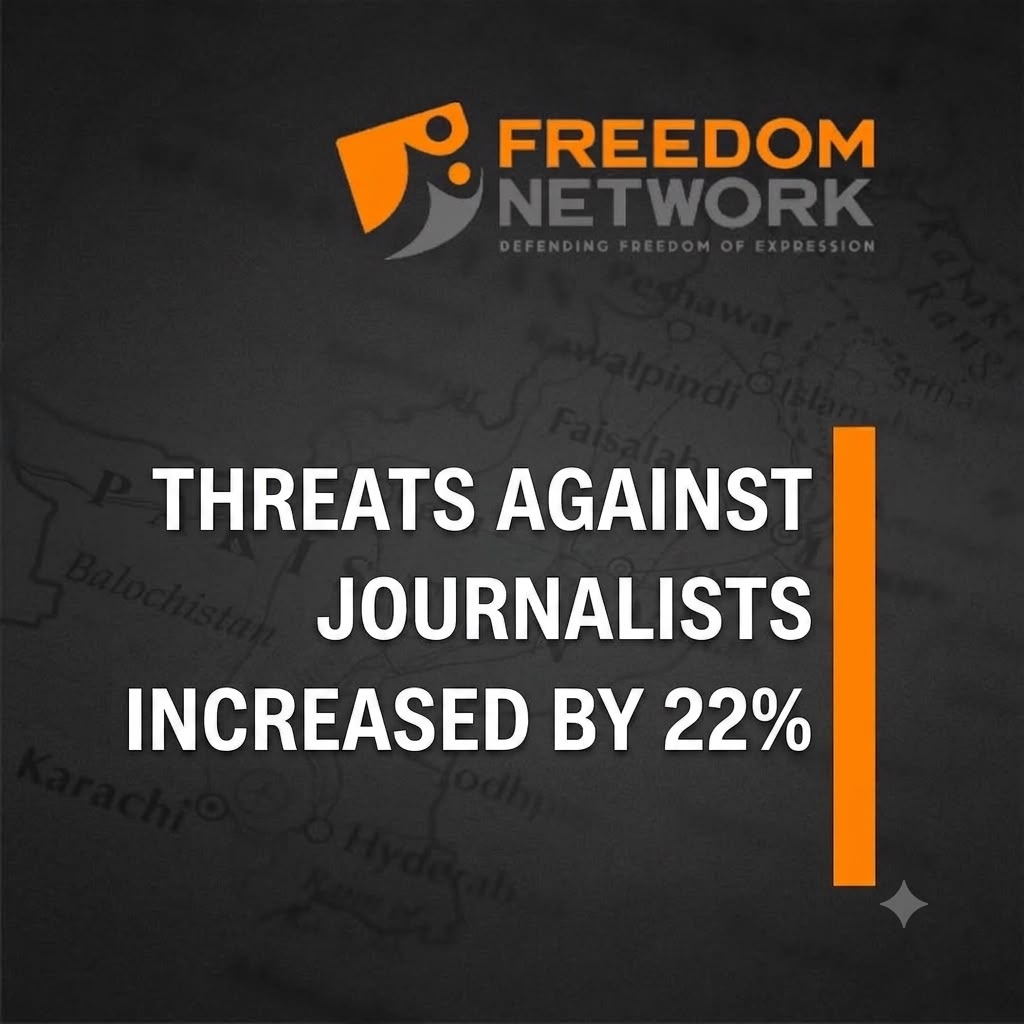
PESHAWAR: The Freedom Network’s quarterly threat assessment report from April to June 2026 documented 22 cases of threats against journalists across Pakistan, marking a 22 percent increase compared to the first quarter of the year. Journalists said some of the cases not documented due to security reasons were not included in the Freedom Network quarterly report.
The Freedom Network report issued on Wednesday declared Punjab the worst, where the highest number of incidents were recorded, while legal action, arrests, investigations and physical attacks continued to endanger media professionals.
Among the incidents highlighted in the report was a case against a journalist over an alleged social media post, renewing concerns about the increasing use of cybercrime laws against journalists involved in online reporting and commentary. In another serious incident, Abdul Ghafar, Chief Reporter of Daily BBC News in Punjab, survived an alleged murder attempt after armed assailants entered his residence and assaulted him, underscoring the dangers faced by journalists reporting on crime and influential groups.
According to the report, state institutions remained the principal source of documented threats. Of the 22 recorded cases, 15 (68 percent) were allegedly linked to state actors through arrests, legal proceedings, investigations, or administrative measures. Non-state actors were linked to four cases (18 percent), criminal gangs to two cases (9 percent), while one case (5 percent) involved a political party and another remained attributed to unidentified perpetrators. The report notes that although physical attacks by criminal elements and militant groups remain a serious concern, legal and administrative actions by state institutions constituted the most frequent pattern of threats during the quarter.
Freedom Network called on the federal and provincial governments, law enforcement agencies, the judiciary, parliamentarians, media organizations and civil society to take coordinated measures to improve the safety of journalists and end impunity for crimes against media workers. The organization also reiterated its demand for reforms to laws frequently used against journalists, particularly cybercrime and criminal legislation, to ensure compliance with constitutional protections for freedom of expression and Pakistan’s international human rights commitments.
Journalists working in Pakistan’s tribal districts said the overall security environment remained particularly challenging despite improvements in some areas. They said reporters in districts such as Khyber, Kurram, North Waziristan, South Waziristan, Bajaur, Mohmand, Orakzai and other former FATA regions continue to face threats from militant groups, pressure from state institutions and intimidation from local influential actors, making independent reporting increasingly difficult.
Senior journalist Wali Khan Shinwari has expressed serious concern over the state of press freedom in Pakistan’s erstwhile FATA, stating that freedom of speech and expression remained under severe threat in the region.
He said that journalists working in the former tribal areas continue to face grave security challenges and live under constant fear. According to him, when journalists leave their homes each morning to perform their professional duties, they fear being targeted and are not sure that they will return home safely. Shunwari said journalists in Pakistan are subjected to persistent threats from both state and non-state actors, making the practice of journalism extremely dangerous.
Wali Khan Shinwari further stated that since 9/11, dozens of journalists from erstwhile FATA have lost their lives while carrying out their professional responsibilities. He regretted that, despite these tragic incidents, no perpetrators have been brought to justice and the bereaved families were still waiting to bring the killers into accountability and justice.
He emphasized that the government has failed to provide adequate protection and security to journalists working in the region, leaving them vulnerable to intimidation and violence.
He appealed to the Government of Pakistan, national and international human rights organizations and international journalists’ associations to take immediate and effective measures to ensure the safety and security of journalists in erstwhile FATA, uphold freedom of expression and guarantee an environment in which media professionals could carry out their duties without fear or intimidation.
Another senior journalist from Kurram district, Anwar Shah, said journalists frequently receive threats after covering militancy, security operations, cross-border issues and human rights.
“The space for independent journalism has shrunk considerably. Reporters often have to weigh public interest against personal safety before publishing a story,” he said. He said several journalists in Pakistan were in hiding as they have repeatedly been threatened by terrorists due to their reports and social media contacts.
Media rights advocates said stronger legal safeguards, effective implementation of journalist protection laws, prompt investigations into attacks and an end to impunity were essential to ensure that journalists across Pakistan, particularly those working in high-risk tribal regions, could perform their professional duties without fear of violence, harassment and prosecution.